( 01 )
Waste-sorting bins
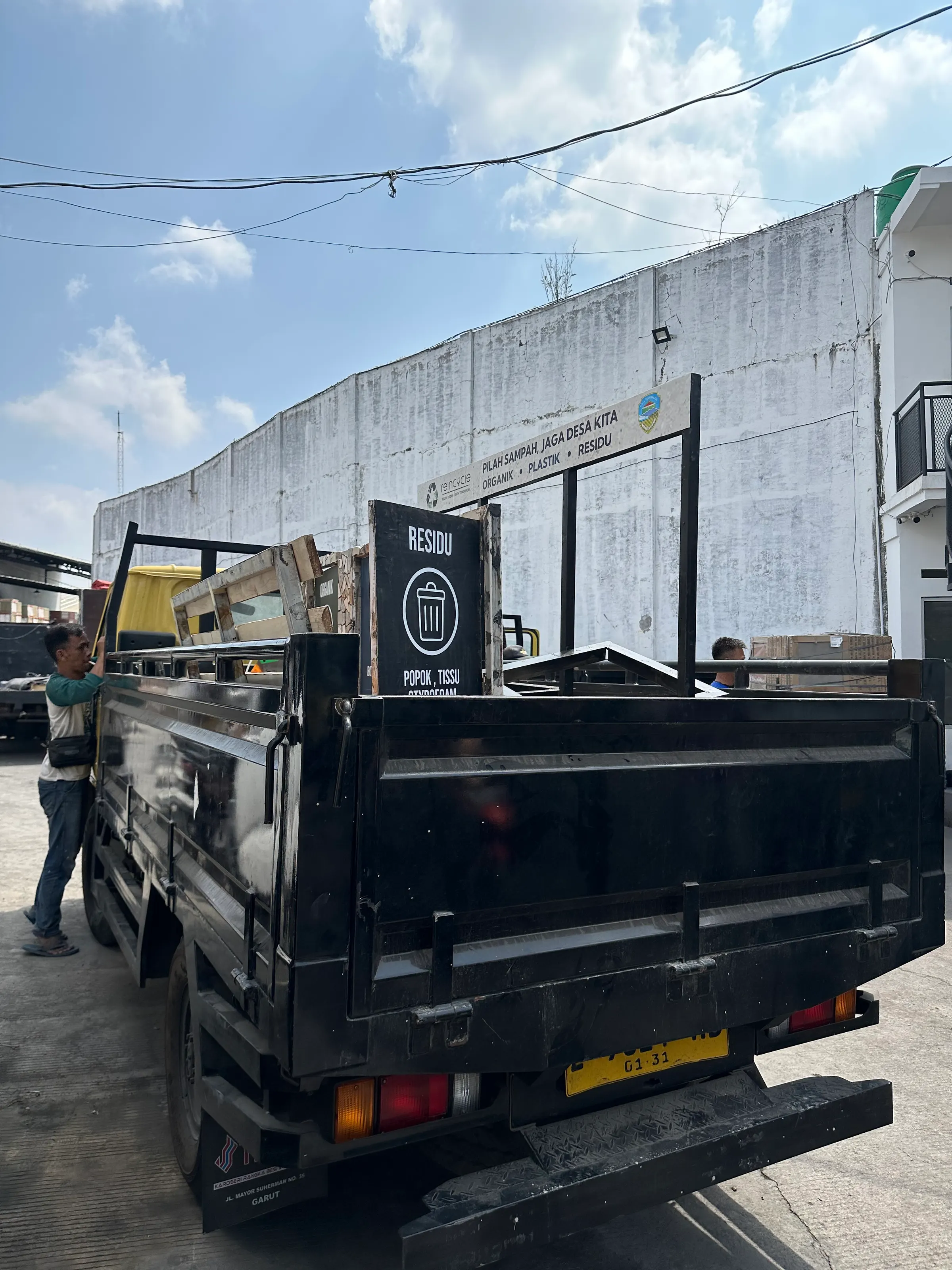
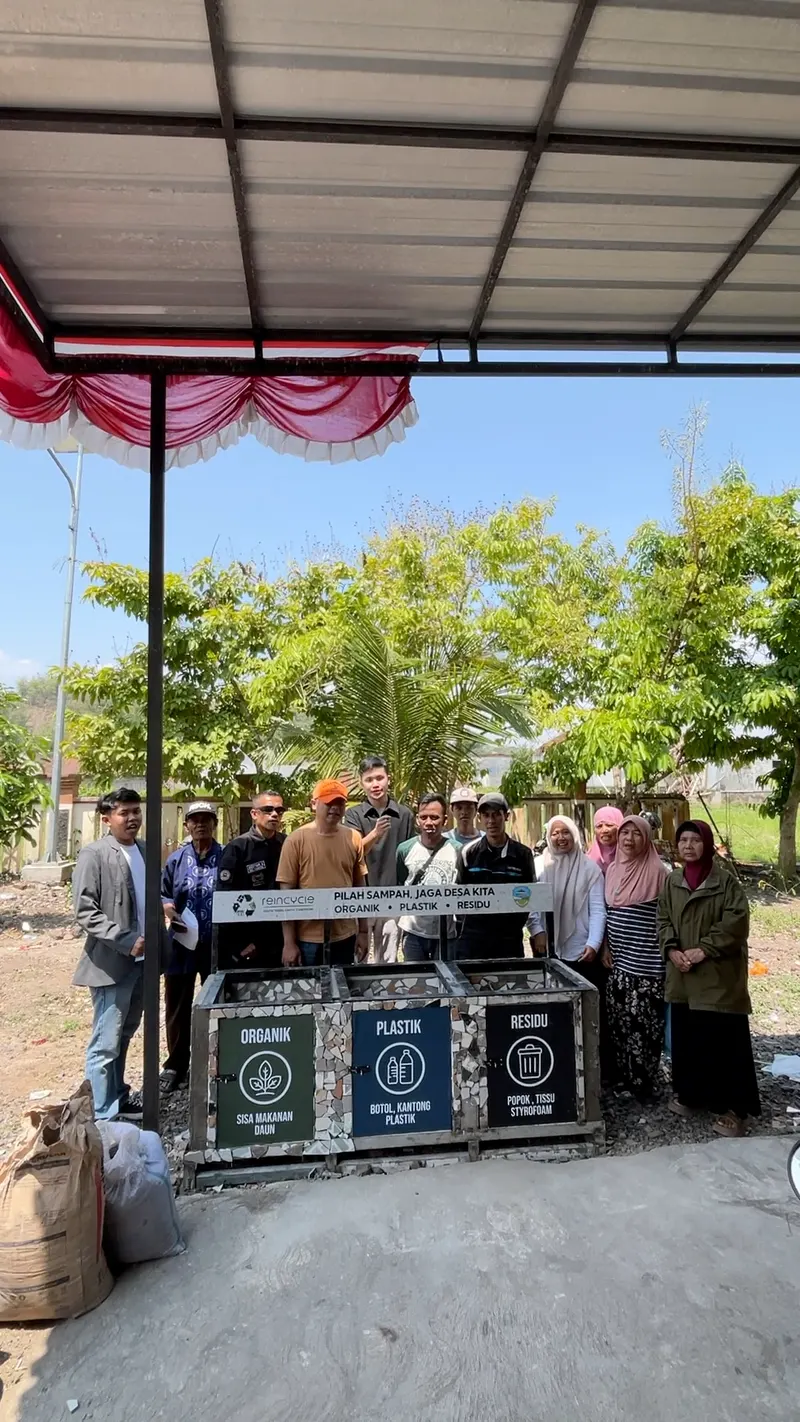
Three sections. Organic, plastic, residual.
- Documented period
- 2026
- Location
- Public areas, Kelurahan Cipawitra, Tasikmalaya
The problem
In conversations before any design existed, residents described disposal points that were too few and often full, and said waste was sometimes burned. They already knew burning was bad; what they lacked was a clear, nearby place to put things.
Materials
- Frame
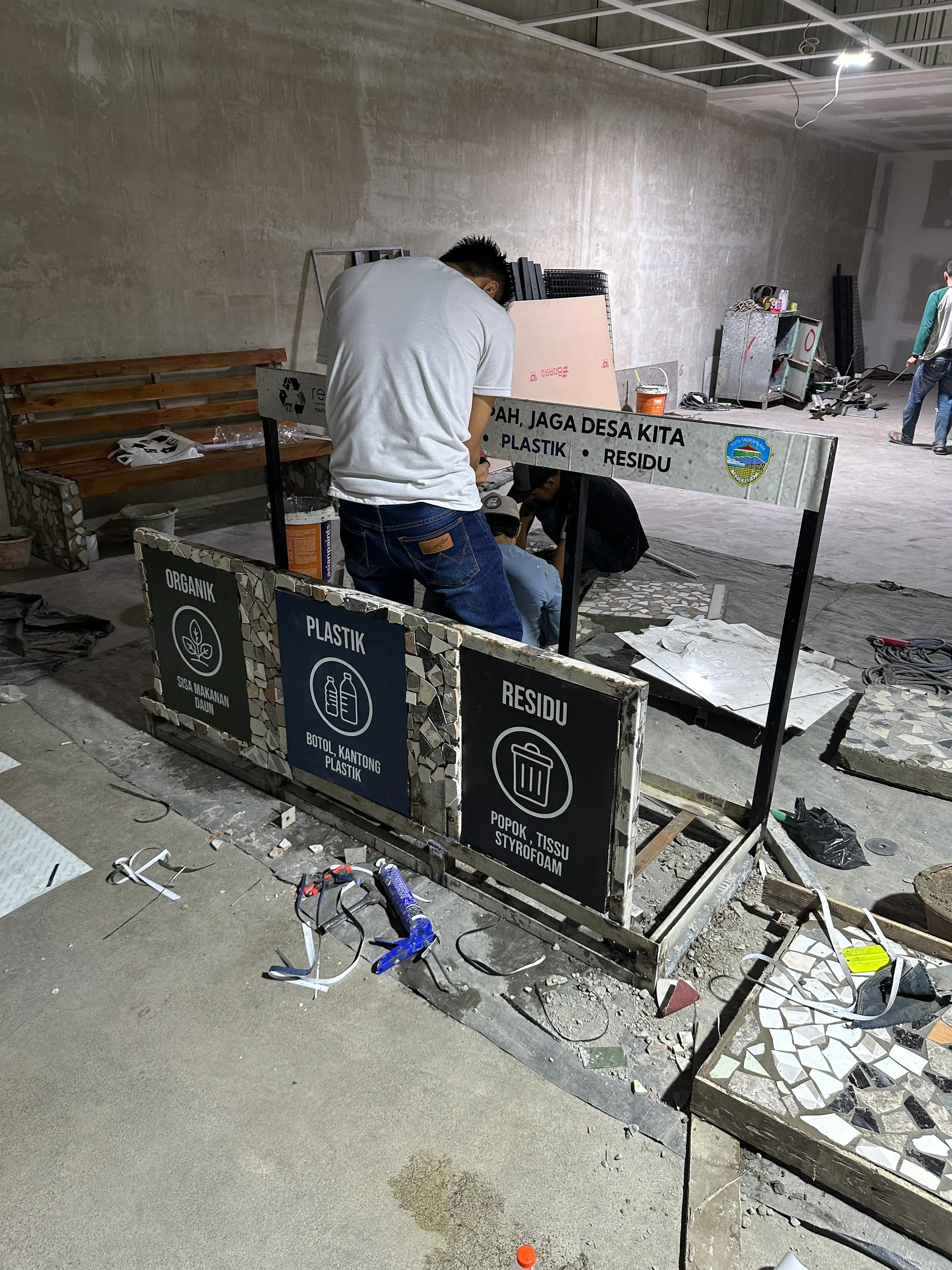
- New steel section, cut and welded in the workshopDocumented
- Base and cladding
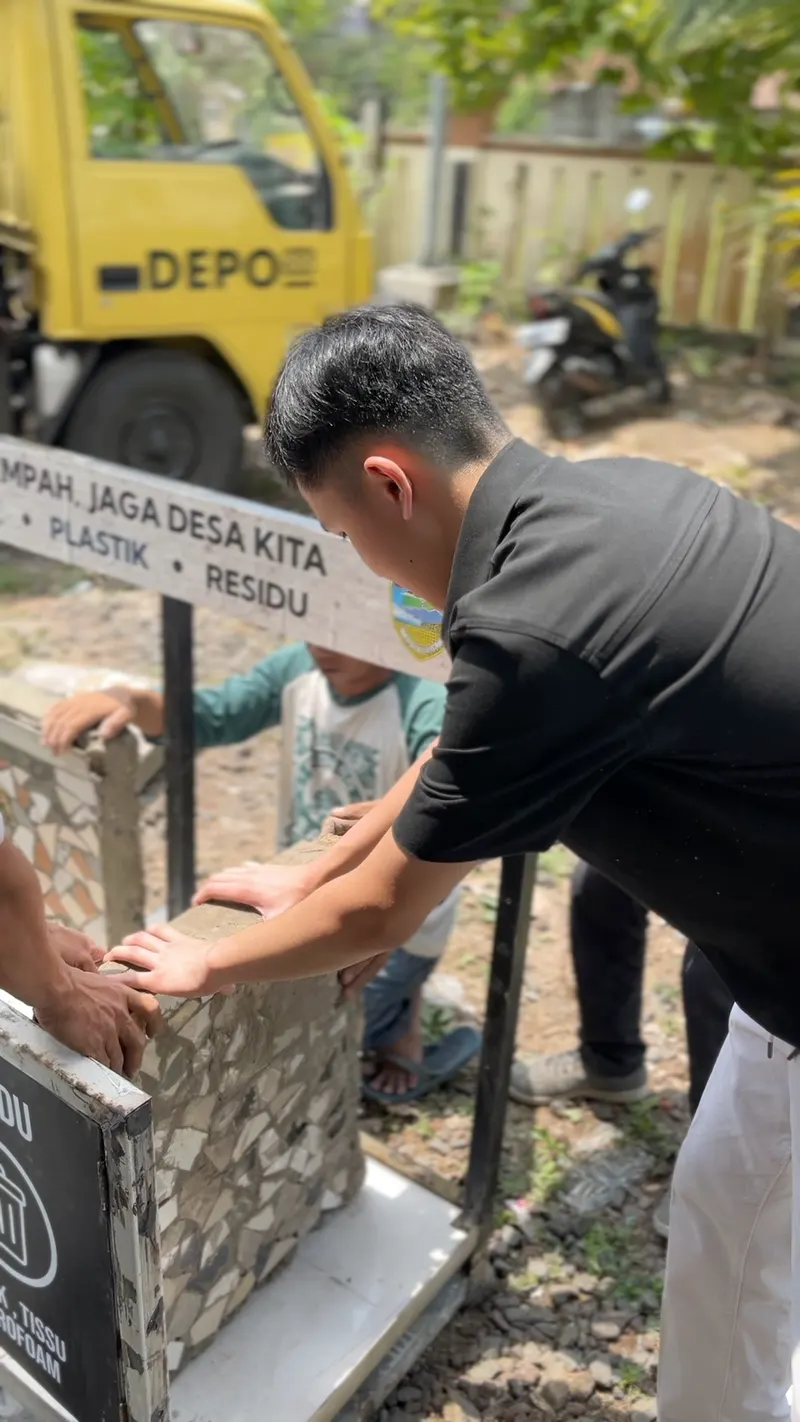
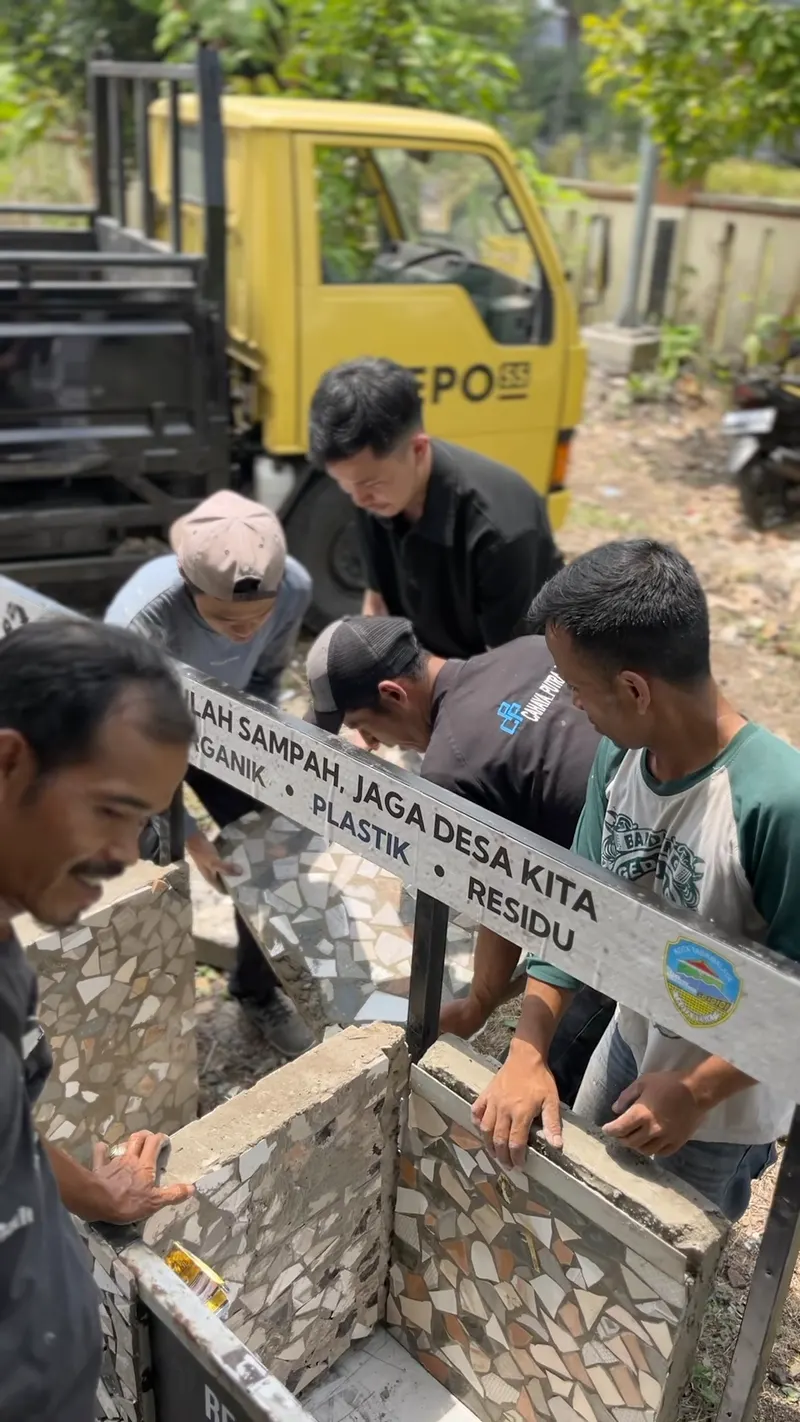
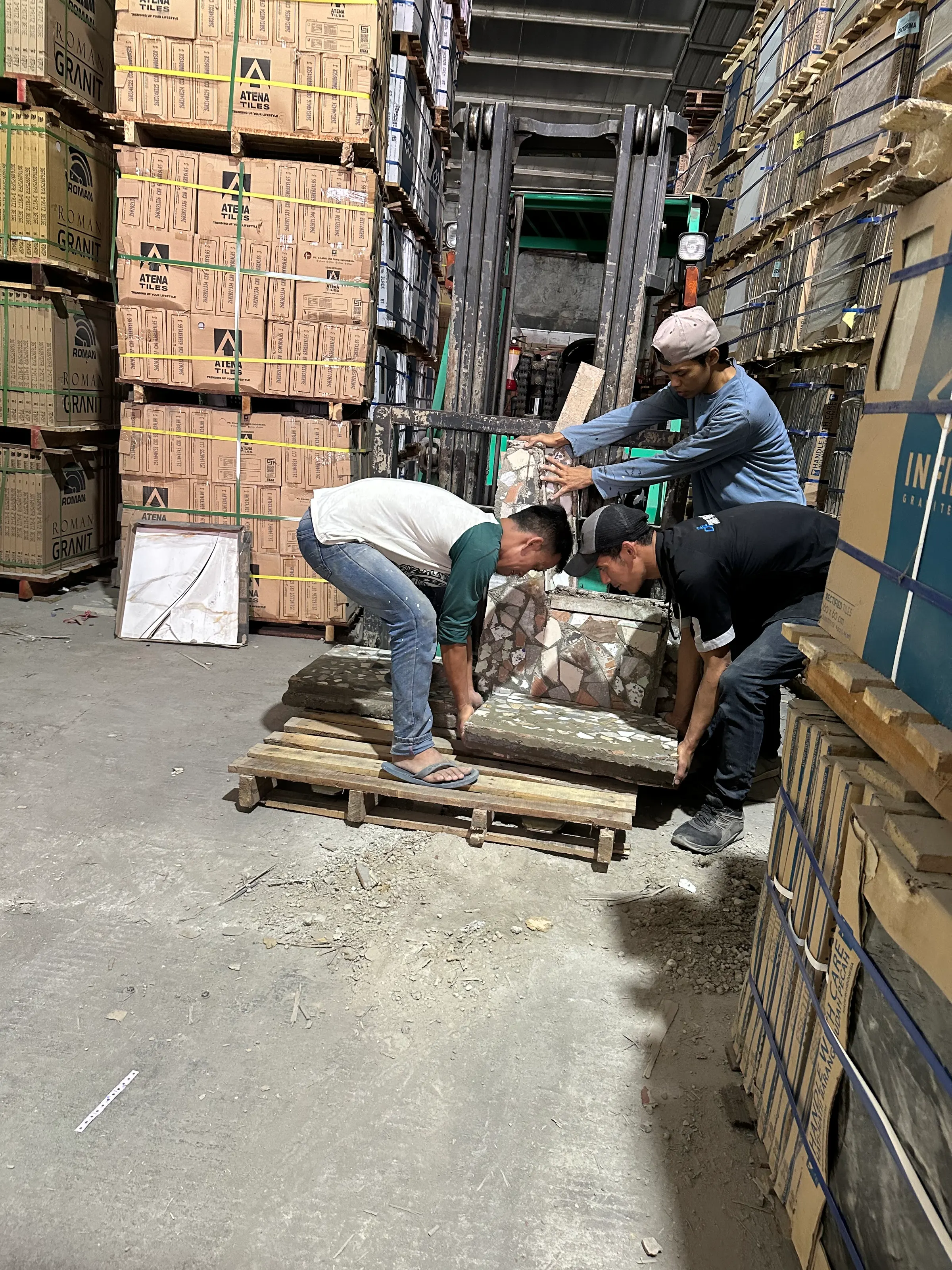
- Concrete base faced with broken floor tile from the family depot, selected by conditionDocumented
- Sections and signs
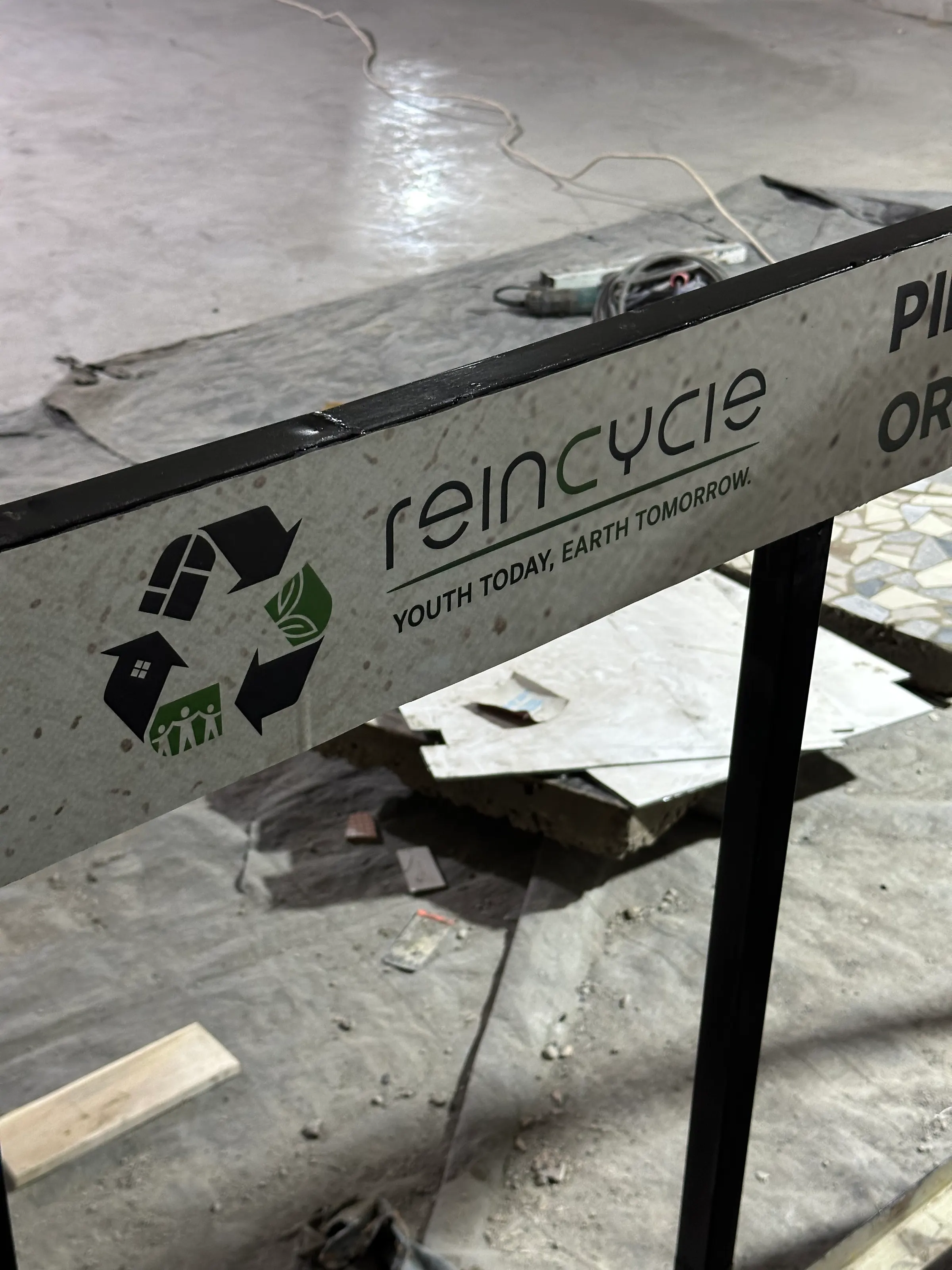
- Three compartments with printed boards: ORGANIK (food scraps, leaves) · PLASTIK (bottles, bags) · RESIDU (nappies, tissue, styrofoam); headboard "Pilah sampah, jaga desa kita"Documented
- Inner bin
- Planned as removable for washing; confirm on installed unitsProject record
Design and production
Listen before drawing
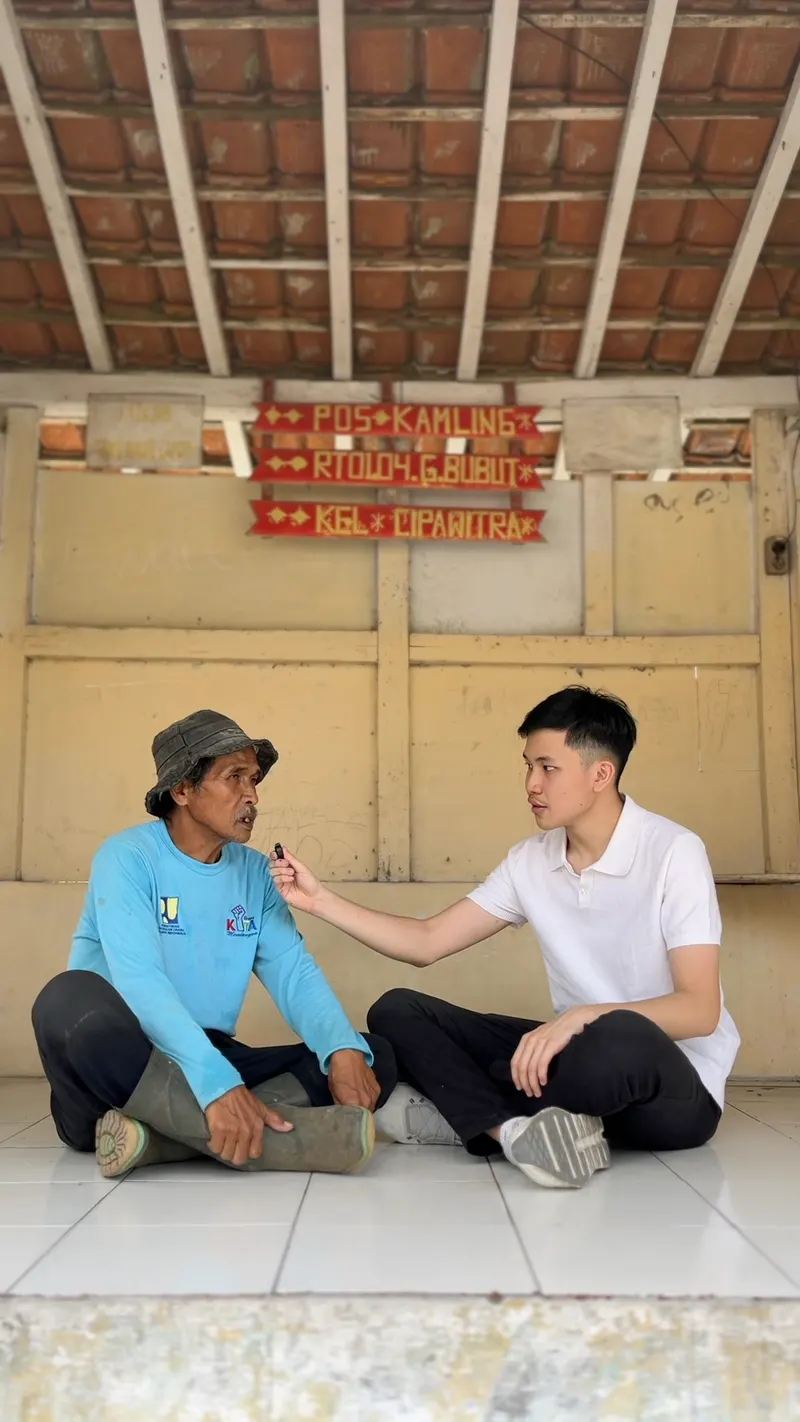
A formal visit to the kelurahan and informal conversations with residents came first. The brief for the documentation team was explicit: do not mention a product, ask what is missing.
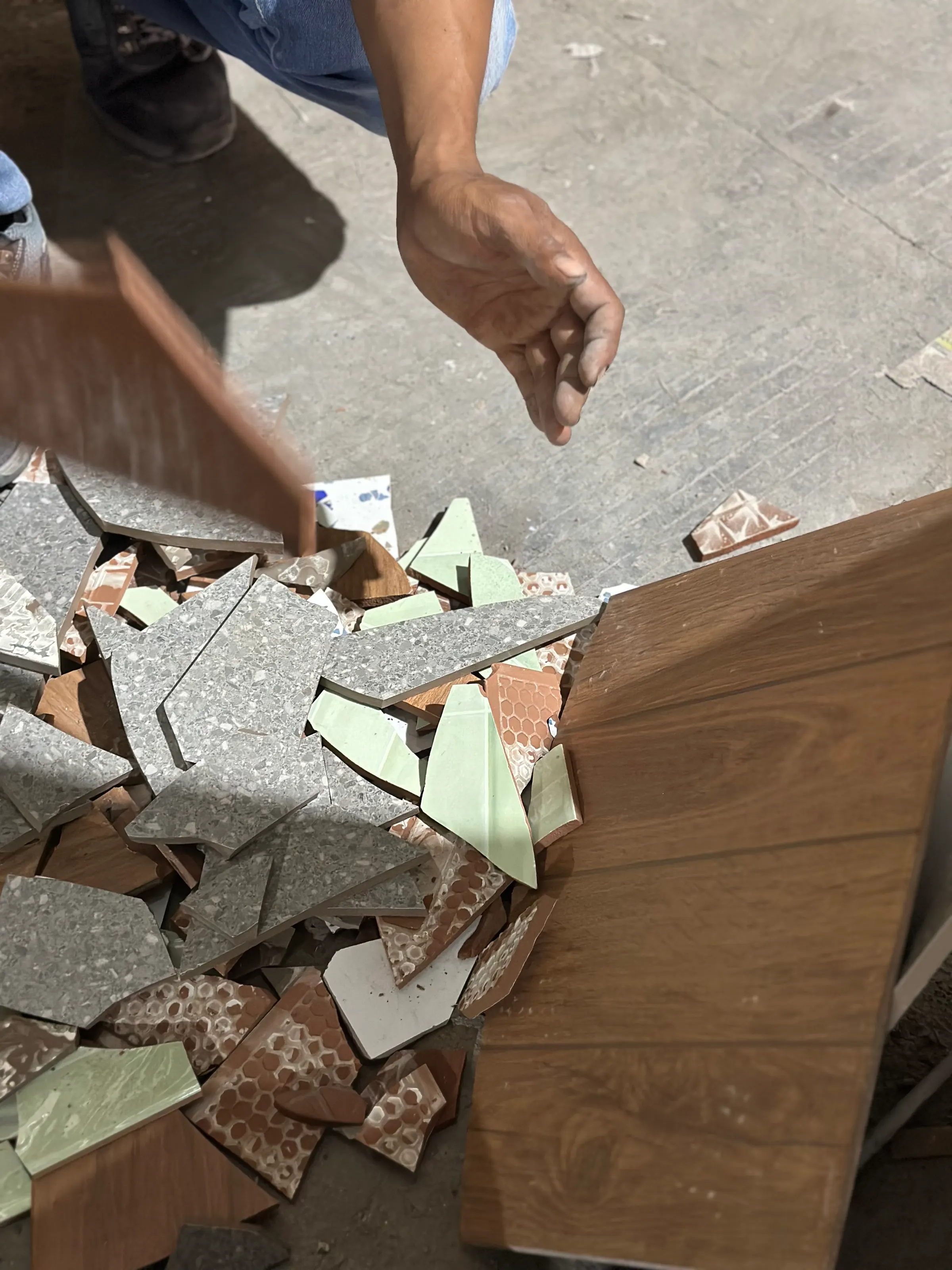
Sort the pile
Unsellable stock was separated into pieces that were genuinely unsafe and pieces that had only lost their sale value. Sharp, crumbling or badly cracked pieces were rejected.
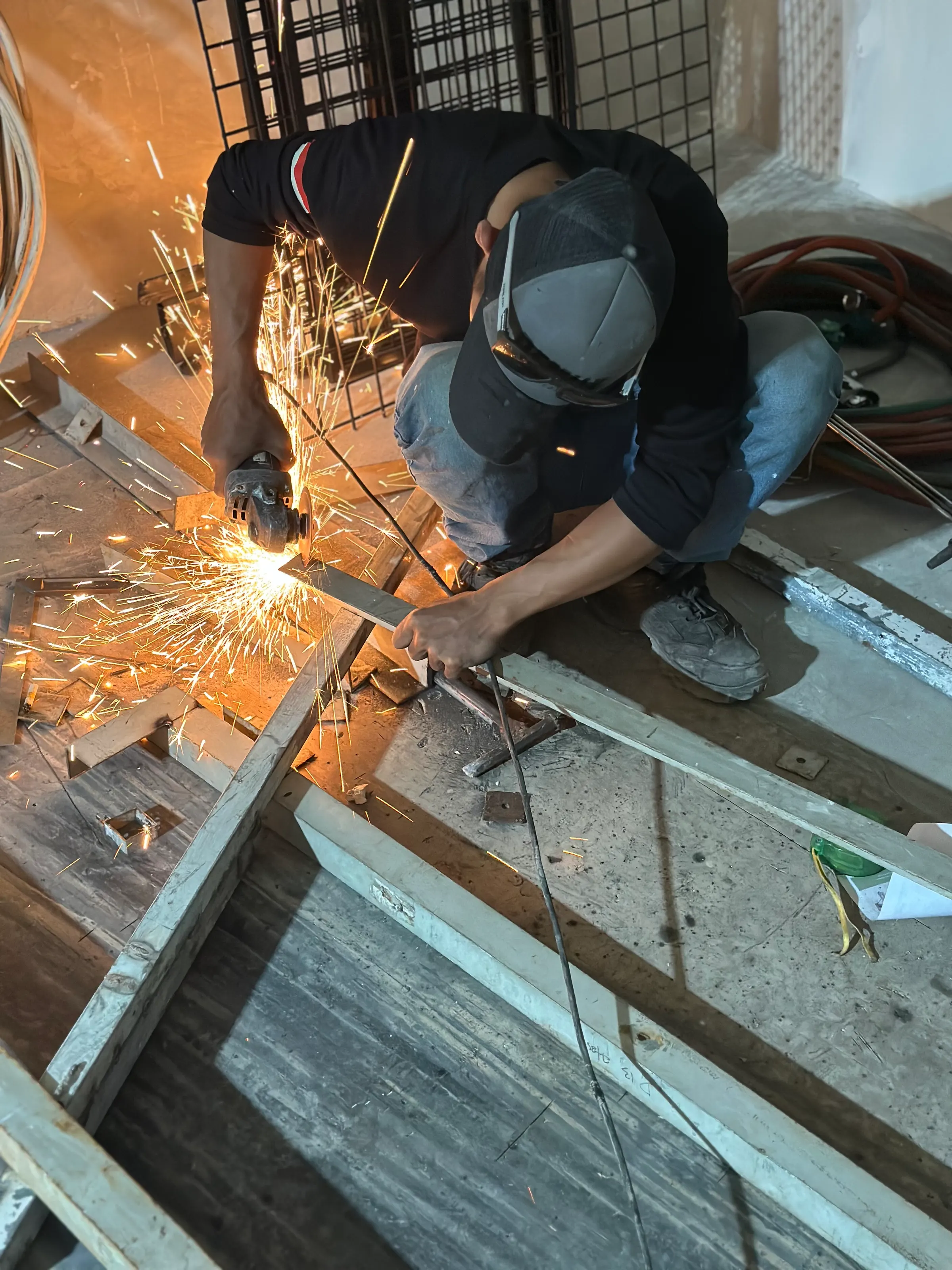
Frame first, cladding last
Makers cut and welded the steel frame before any tile was set. Reclaimed pieces were pressed into the concrete base only, never into anything that carries load, and every reachable edge was set flush.
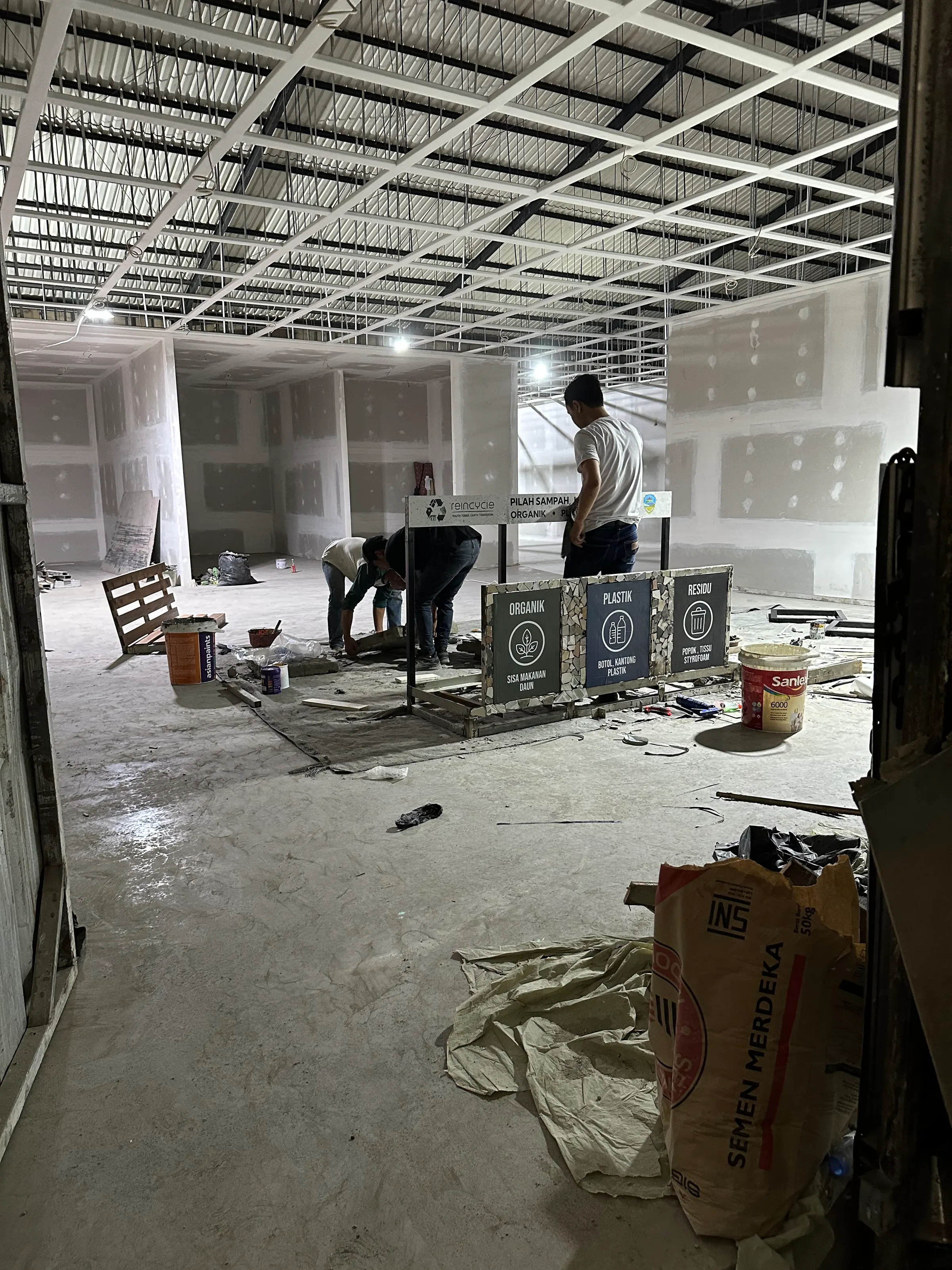
Review from a distance
The founder reviewed daily photos from Shenzhen. One paint finish did not meet the standard and was redone before installation.
Who did what
- Residents and kelurahan staffDescribed the problem, suggested where units would actually be used, and confirmed installation in writing.
- Local makers (about five, paid per job)Fabricated frames, set cladding, finished surfaces, and began checking one another's work.
- Founder and project leadChose the scope, set the safety rule, reviewed progress remotely, and decided what not to build.
- Family building-materials businessDonated the leftover material and workshop space.
Outcome
Sorting units with organic, plastic and residual sections, each under a sign that reads "Pilah sampah, jaga desa kita" (sort your waste, look after our village), now stand in public areas of the kelurahan. They are part of the nine units installed in 2026.
Figures
- Units installed (bins and seating combined)
- 9 · in 2026Project record
- Reclaimed material used (kg)
- Not yet weighedNot yet recorded
- Sorting behaviour
- Not measuredNot yet recorded
Challenges
- Designing for a place the founder was not standing in, with photos as the only daily check.
- Deciding which damaged pieces were safe enough to use, without a lab, by rule of thumb and a maker's hands.
- Keeping scope small when residents' needs were larger than the material could serve.
Lessons
- Installation is the start of the question, not the answer. Who empties the bins, how often, and whether sorting holds are the next things to record.
- Write the actual numbers down at the workshop, the day it happens. Planning targets do not become data on their own.
Current status
Installed. Use is observed, not yet measured. Next step: a simple log of emptying and condition, kept by the kelurahan or a resident volunteer if one exists.
Photographs