( 03 )
The material audit
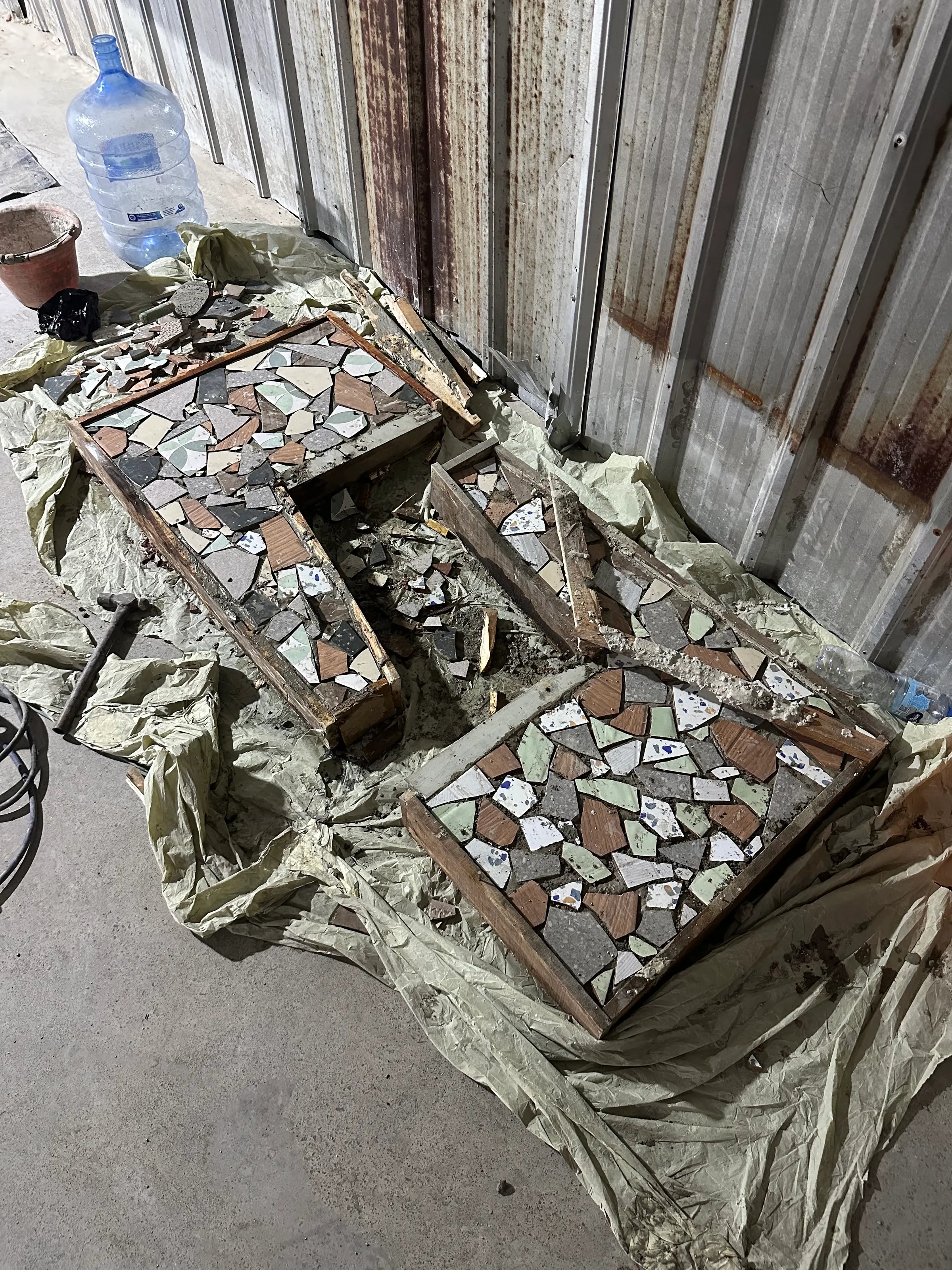
Before asking what it could become, we asked what it was.
- Documented period
- 2026 – ongoing
- Location
- Depot warehouse, Tasikmalaya
The problem
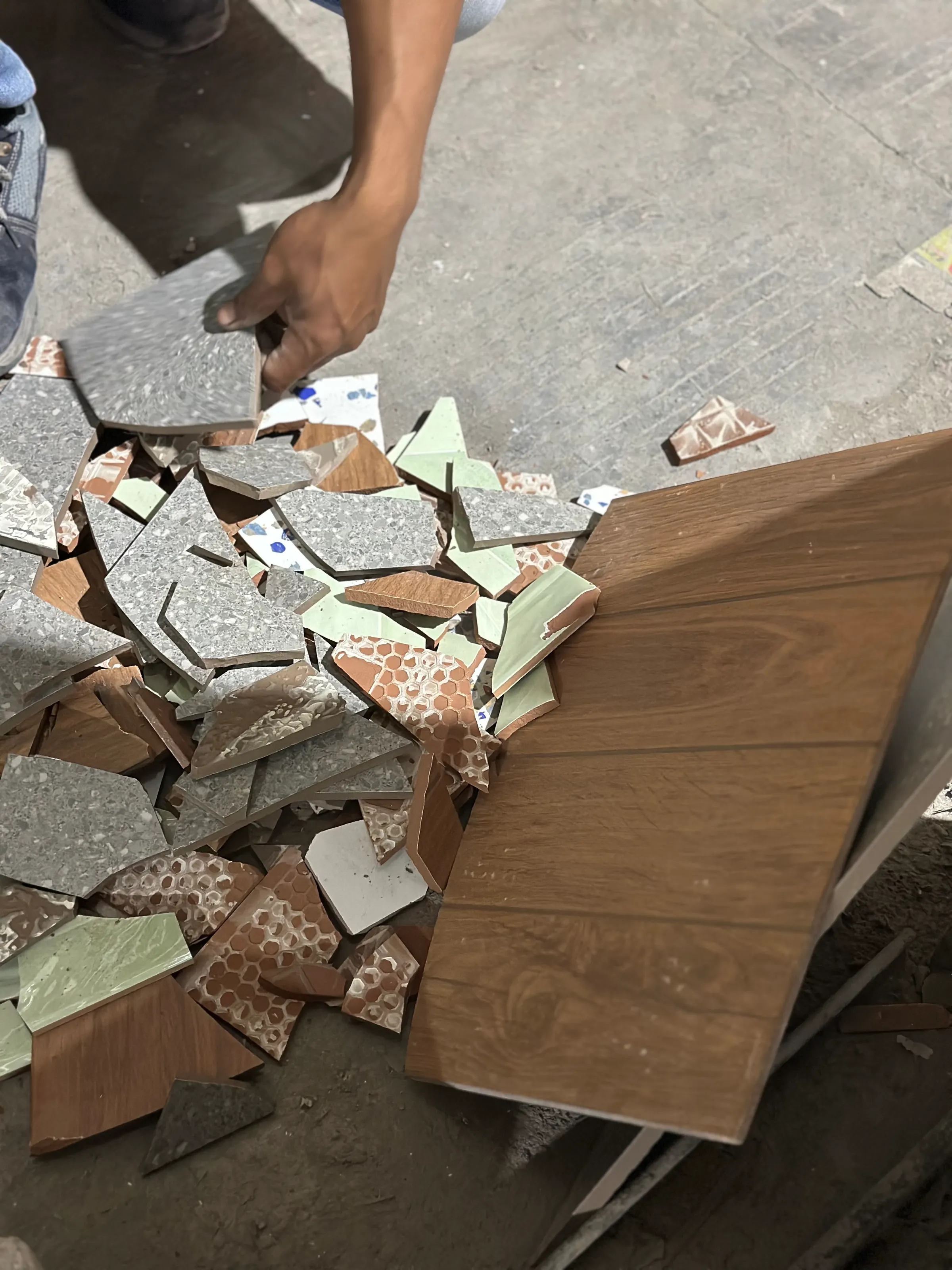
"Can't be sold" is one label for many conditions. A tile with a chipped corner and a tile cracked through are both unsellable, but only one of them is useless.
Materials
- Categories found
- Ceramic tile, paving, brick, offcut timberProject record
- Rejection rule
- Sharp, crumbling, badly cracked or unknown strength → not usedDocumented
Design and production
Look at what everyone stopped seeing
The founder grew up around the depot. Damaged goods were routine. The first act of the project was to treat the routine pile as a question.
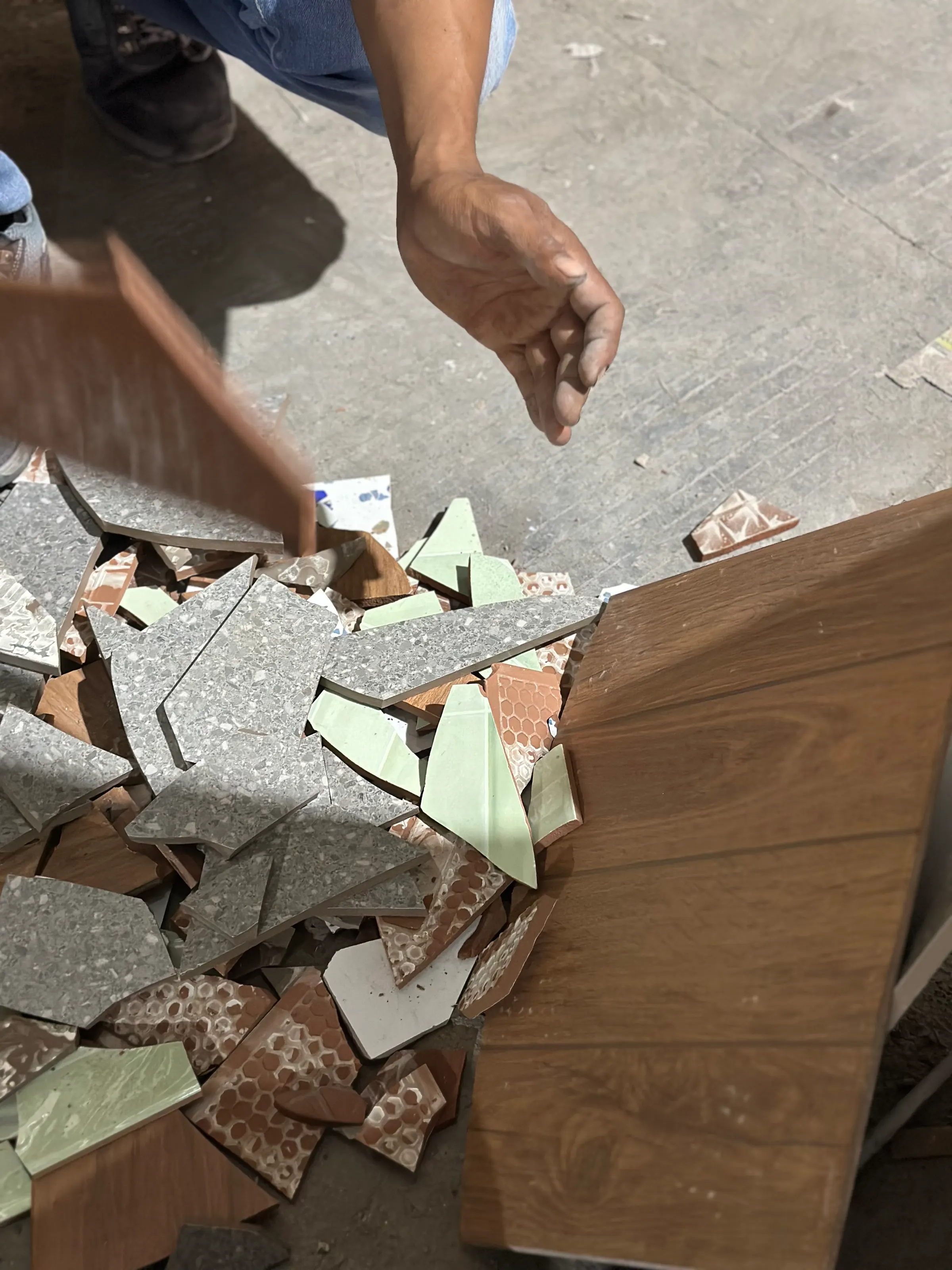
Separate by condition
With a senior depot worker, pieces were graded by how damaged they were, whether any part was intact, and whether they were worth a second look.
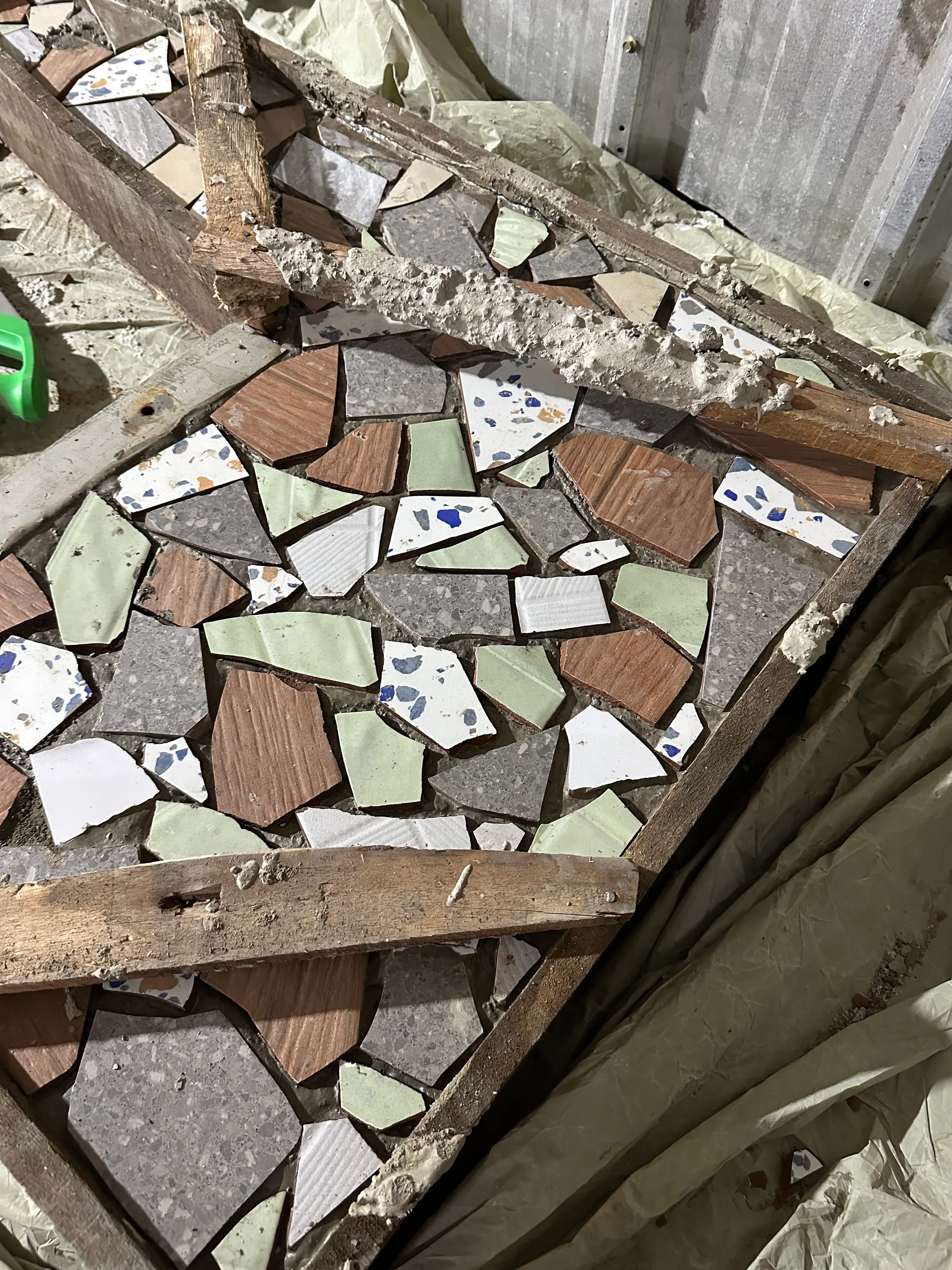
Count, measure, write it down
Type, quantity, size and condition were to be tallied so that later decisions could start from numbers. This is the part of the record that is still incomplete.
Who did what
- Depot workersExplained what actually happens to damaged stock and graded pieces by experience.
- FounderSet the rule that reclaimed material is never load-bearing.
Outcome
A working rule for what can be reused, and a pile that is now sorted. The quantitative tally is still to be completed and published.
Figures
- Material weighed
- Not yet recordedNot yet recorded
Challenges
- Grading by eye is fast but not repeatable; two people can disagree about the same tile.
Lessons
- Broken and useless are not the same thing. But broken and useful are not automatically the same thing either.
Current status
Ongoing. The tally sheet exists as a template; filling it is the next task at the depot.
Photographs